
Rug Backing Explained: Why It Matters for Quality, Durability & Longevity

When choosing a rug, most people naturally focus on its color, pattern, size, texture, and material. Those are important considerations, but there is another part of a rug that deserves just as much attention: the backing.
Rug backing is the material or construction found on the underside of a rug. While it may not be visible once the rug is placed on the floor, it can influence how the rug performs in everyday use. From helping maintain the structure of the rug to supporting stability and protecting the underside, backing can play an important role in the overall experience.
This is especially important when choosing a handmade rug. Handcrafted rugs are made using different techniques, fibers, and construction methods, and their undersides can naturally look and feel different from one another. A woven rug, tufted rug, flatweave, and hand-knotted rug may each have a different type of underside.
Understanding rug backing can therefore help you make a more informed decision when buying a rug.
In this guide, we will explore what rug backing is, why it matters, the different types of backing you may encounter, how backing affects durability, and how to choose the right rug for your space.
What Is Rug Backing?
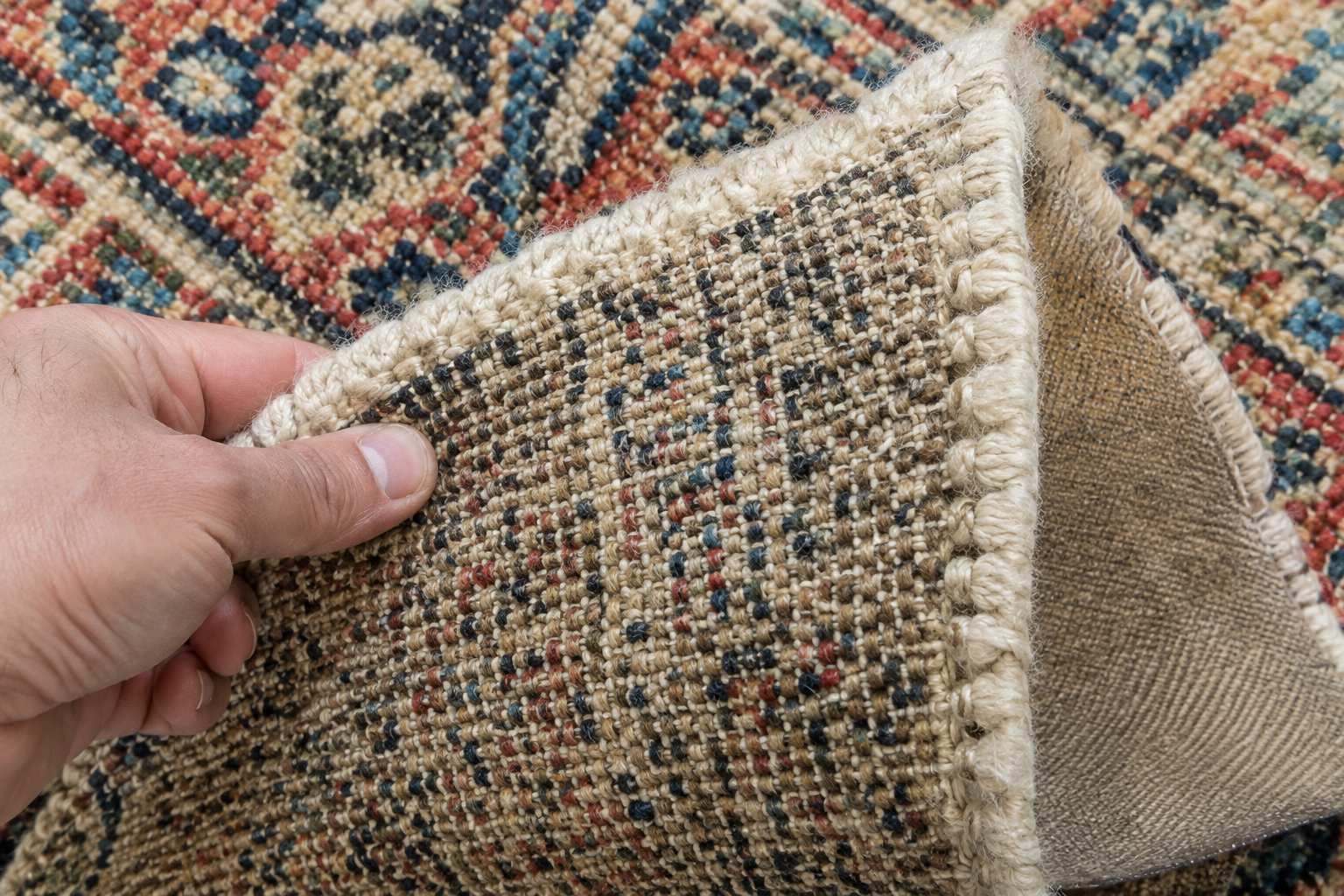
Rug backing refers to the underside or supporting structure of a rug.
Depending on the rug's construction, backing may be made from the same fibers used throughout the rug or may consist of an additional material applied to the underside.
For example, a handwoven or hand-knotted rug may have a naturally woven underside that reflects its construction. A tufted rug may have a secondary backing attached to the back to help secure the yarn and maintain the shape of the rug.
Some rugs have very little distinction between the face and underside because the entire rug is constructed through weaving or knotting. Others have a clearly visible backing layer.
The backing is therefore not one universal material. It varies according to:
- Rug construction
- Material
- Manufacturing technique
- Intended use
- Rug design
- Desired durability
- Overall construction
This is why understanding the type of rug you are buying is just as important as looking at its backing.
Why Does Rug Backing Matter?
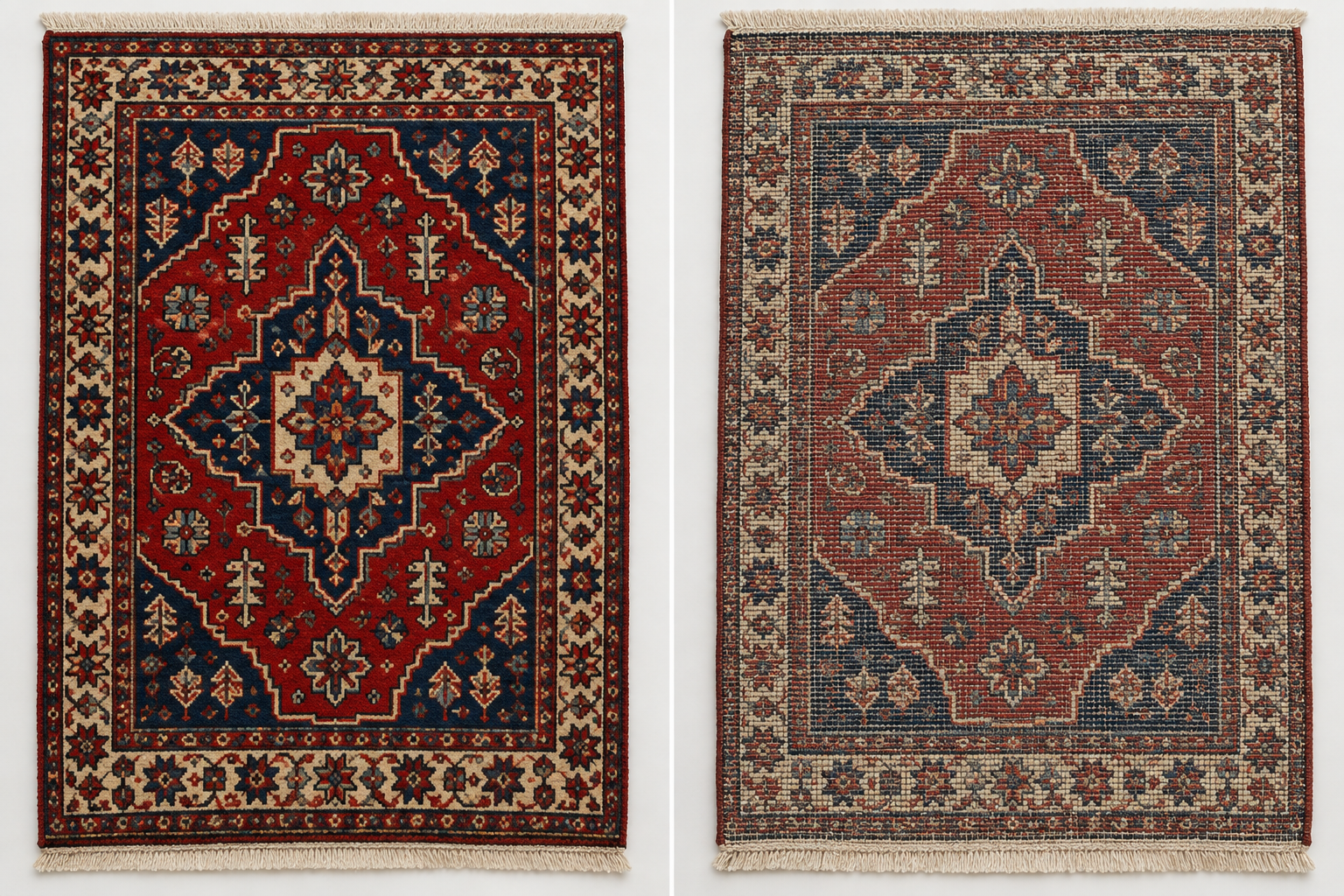
A rug is exposed to everyday movement, furniture, foot traffic, cleaning, and changes in its surrounding environment. Its construction needs to withstand these conditions while maintaining its appearance.
Backing can contribute to several aspects of rug performance.
1. It Can Support the Rug's Structure
A rug needs to maintain its shape during everyday use. A suitable backing or underlying construction can help support the overall structure and reduce excessive movement or distortion.
This is particularly relevant for rugs that receive regular foot traffic.
2. It Can Help Keep Fibers Secure
In certain rug constructions, the backing helps hold yarns or fibers in place.
This is especially relevant to tufted rugs, where yarn is inserted through a primary foundation and may then receive a secondary backing.
A well-constructed rug should have a secure relationship between its surface, foundation, and backing.
3. It Can Affect Durability
Durability does not come from backing alone. The quality of the fibers, weave, knots, density, craftsmanship, and construction all contribute.
However, the backing system can form an important part of the rug's overall construction.
A rug intended for a busy living room, hallway, or family area needs to be constructed differently from a decorative rug intended for a low-traffic room.
4. It Can Influence Stability
Some rugs move more easily on smooth floors than others. The rug's material, size, weight, floor surface, and backing can all influence how stable it feels.
For rugs placed on smooth surfaces, a properly selected rug pad can often provide additional grip and cushioning.
5. It Can Affect Comfort
The underside of a rug can contribute to how the rug interacts with the floor beneath it.
However, the surface construction and pile are usually more directly responsible for the feeling underfoot.
For example, a thick wool pile will generally feel very different from a thin flatweave, even if both rugs have excellent construction.
Common Types of Rug Backing
There is no single best backing for every rug. Different rug constructions use different approaches.
Let's look at some common types.
1. Woven Backing
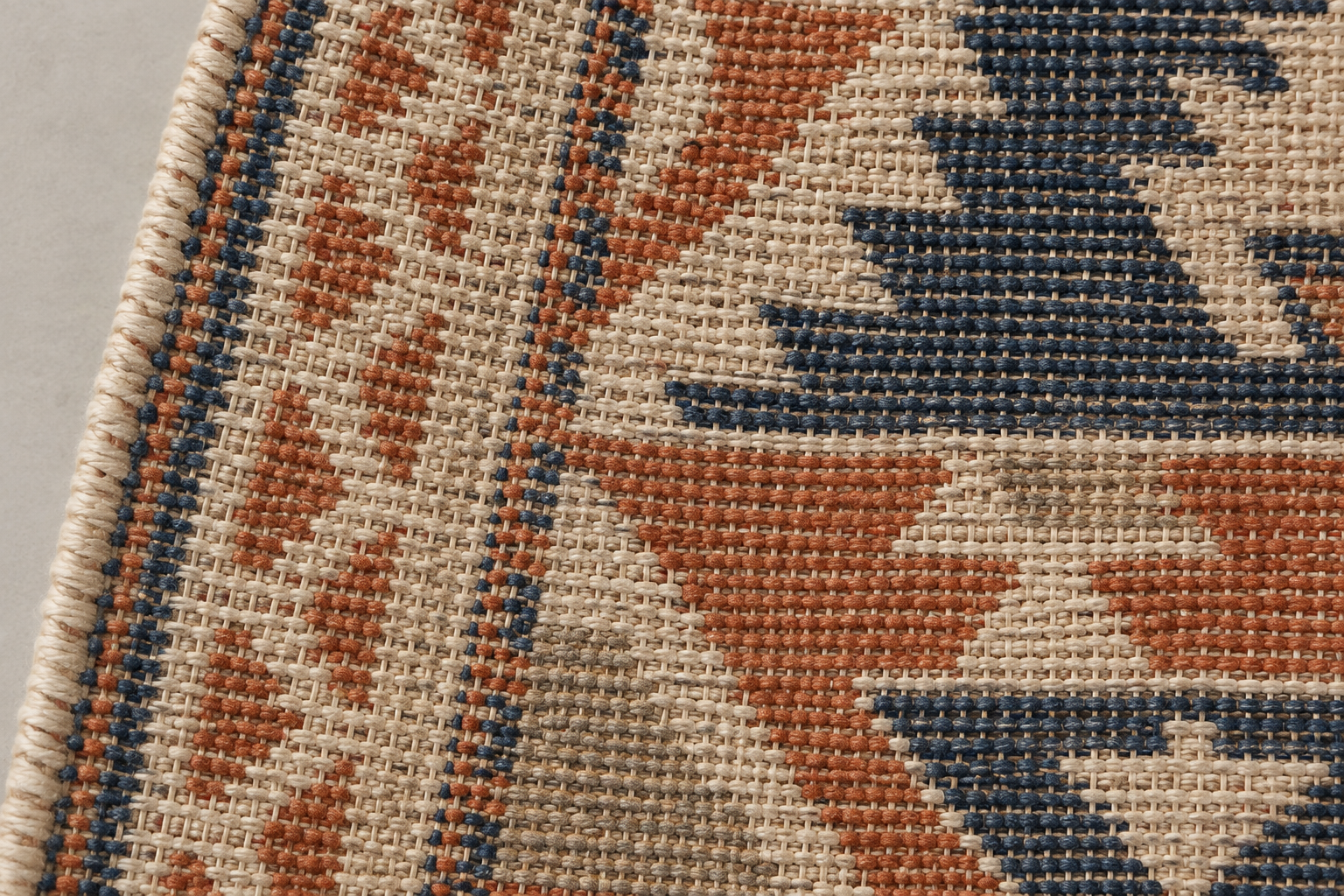
Woven rugs are often constructed by interlacing yarns or fibers to create the rug itself.
In these rugs, the underside may reveal part of the weaving pattern.
Flatweave rugs are a good example. Because they do not have a traditional raised pile, their construction can often be seen clearly from the back.
Benefits of woven construction
- Durable construction
- Often lightweight
- Reversible designs may be possible
- Suitable for many interior styles
- Relatively easy to place and move
Woven construction is especially popular for flatweave and traditional rug styles.
2. Tufted Rug Backing
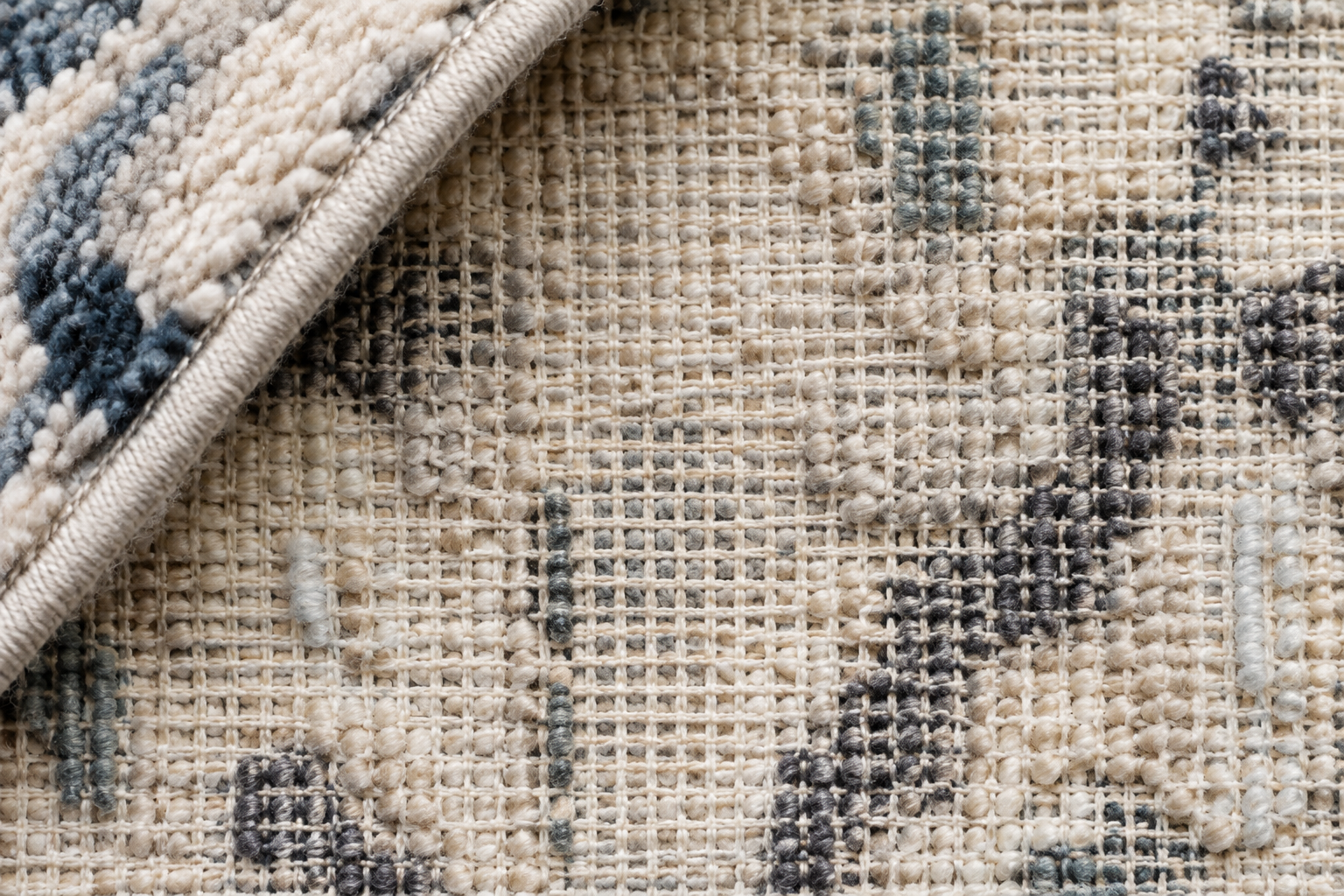
Tufted rugs are constructed differently.
Instead of individually knotting every yarn into the foundation, yarn is inserted through a backing material to create the design. A secondary backing may then be attached to the underside.
The backing helps secure the construction and gives the rug a finished underside.
Tufted rugs can offer a wide range of patterns and textures, including highly dimensional designs.
Why backing is important for tufted rugs
Because the yarn is inserted into a foundation rather than individually knotted in the same way as a hand-knotted rug, the backing system is an important part of the construction.
The quality of the materials and workmanship used in the backing can therefore contribute to how well the rug performs over time.
3. Latex or Adhesive-Based Backing
Some rugs, particularly certain tufted or machine-produced rugs, may use an adhesive or latex-based layer to help hold the rug construction together.
This type of backing can provide structure and help secure fibers.
However, the exact materials used can vary significantly between manufacturers.
If purchasing a rug with adhesive-based backing, it is useful to understand what materials have been used and what care instructions are recommended.
4. Cotton or Fabric Backing
Some rugs have a fabric backing attached to the underside.
Cotton and other textiles may be used as part of the construction depending on the rug type.
Fabric backing can provide a neat finished appearance and may help support the underlying structure.
Again, the quality of the entire rug should be considered rather than judging the rug solely by its backing material.
5. Natural Underside of Handwoven and Hand-Knotted Rugs
Many handmade rugs do not require a separate synthetic backing in the way some tufted rugs do.
When you turn over a handwoven or hand-knotted rug, you may be able to see the construction itself.
This can be particularly interesting because the underside may reveal details about the craftsmanship.
The visible knots, weave, foundation, and variations can provide clues about how the rug was made.
For handmade rugs, these natural variations are often part of the character of the piece.
Rug Backing vs. Rug Pad: What's the Difference?
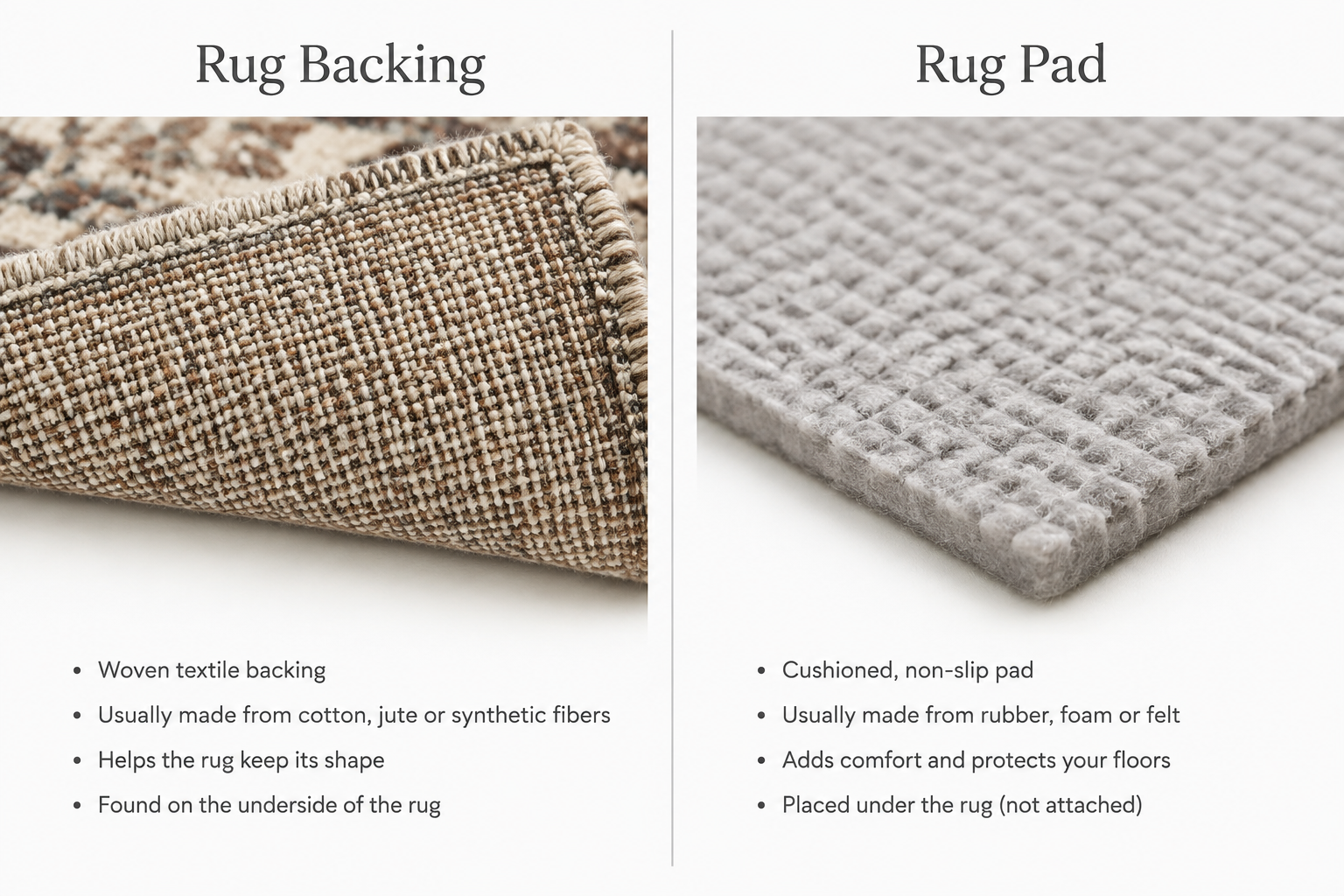
One of the most common misunderstandings is confusing rug backing with a rug pad.
They are not the same thing.
Rug backing is part of the rug itself.
A rug pad is a separate layer placed underneath the rug.
A rug pad can provide several benefits:
- Additional grip
- Cushioning
- Protection for flooring
- Reduced movement
- Added comfort
- Protection against premature wear
Even a beautifully constructed rug can benefit from an appropriate rug pad, particularly when placed on smooth flooring.
The correct pad should be selected based on the rug, flooring type, and intended use.
Does Better Backing Mean a Better Rug?
Not necessarily.
It is tempting to assume that a rug with a thick or heavily coated backing must be higher quality. In reality, rug quality is much more complex.
A high-quality rug can have a relatively simple underside because its strength comes from its woven, knotted, or handcrafted construction.
When evaluating a rug, consider the entire product:
Fiber quality
Natural fibers such as wool can offer excellent durability, softness, and resilience when properly processed and constructed.
Construction
The way a rug is made is one of the most important factors affecting its characteristics.
Density
The density of the rug can influence its feel, appearance, and performance.
Craftsmanship
Handmade rugs can contain subtle variations that reflect the individual nature of the crafting process.
Finishing
The edges, corners, backing, and overall finishing should be considered together.
Intended use
A rug designed for a low-traffic bedroom does not necessarily need the same construction as one intended for a busy hallway.
The best rug is one whose construction matches the way you intend to use it.
How Backing Affects Rug Longevity
Longevity is one of the biggest reasons to pay attention to rug construction.
However, the lifespan of a rug depends on many factors.
These include:
- Fiber type
- Construction
- Density
- Traffic levels
- Cleaning routine
- Exposure to sunlight
- Moisture
- Furniture placement
- Flooring
- Proper use of a rug pad
- Overall craftsmanship
Backing can contribute to the rug's structural integrity, but it cannot compensate for poor-quality fibers or unsuitable construction.
For example, a beautifully finished backing cannot turn a delicate decorative rug into a heavy-duty hallway rug.
The key is matching the rug to its environment.
Does Rug Backing Affect Shedding?
Backing and shedding are related only indirectly.
Shedding is primarily associated with the type of fiber and construction of the rug.
Wool rugs, especially new wool rugs, can naturally release loose fibers during the early stages of use. Regular vacuuming using an appropriate setting can help manage normal shedding.
Backing may influence how the rug is constructed, but it is not usually the primary cause of shedding.
If a rug is shedding excessively or continuously, it may be worth checking the construction and consulting the manufacturer.
Can Rug Backing Damage Hardwood Floors?
A rug itself does not automatically damage hardwood flooring.
However, the combination of the rug, backing material, moisture, dirt, and flooring conditions should be considered.
Some backing materials may not be suitable for certain flooring finishes, particularly if they contain materials that can interact with the finish.
For this reason, always check the rug manufacturer's recommendations before placing a rug directly on finished wood flooring.
A suitable rug pad can also create a protective layer between the rug and the floor.
Choosing Rug Backing for Different Rooms
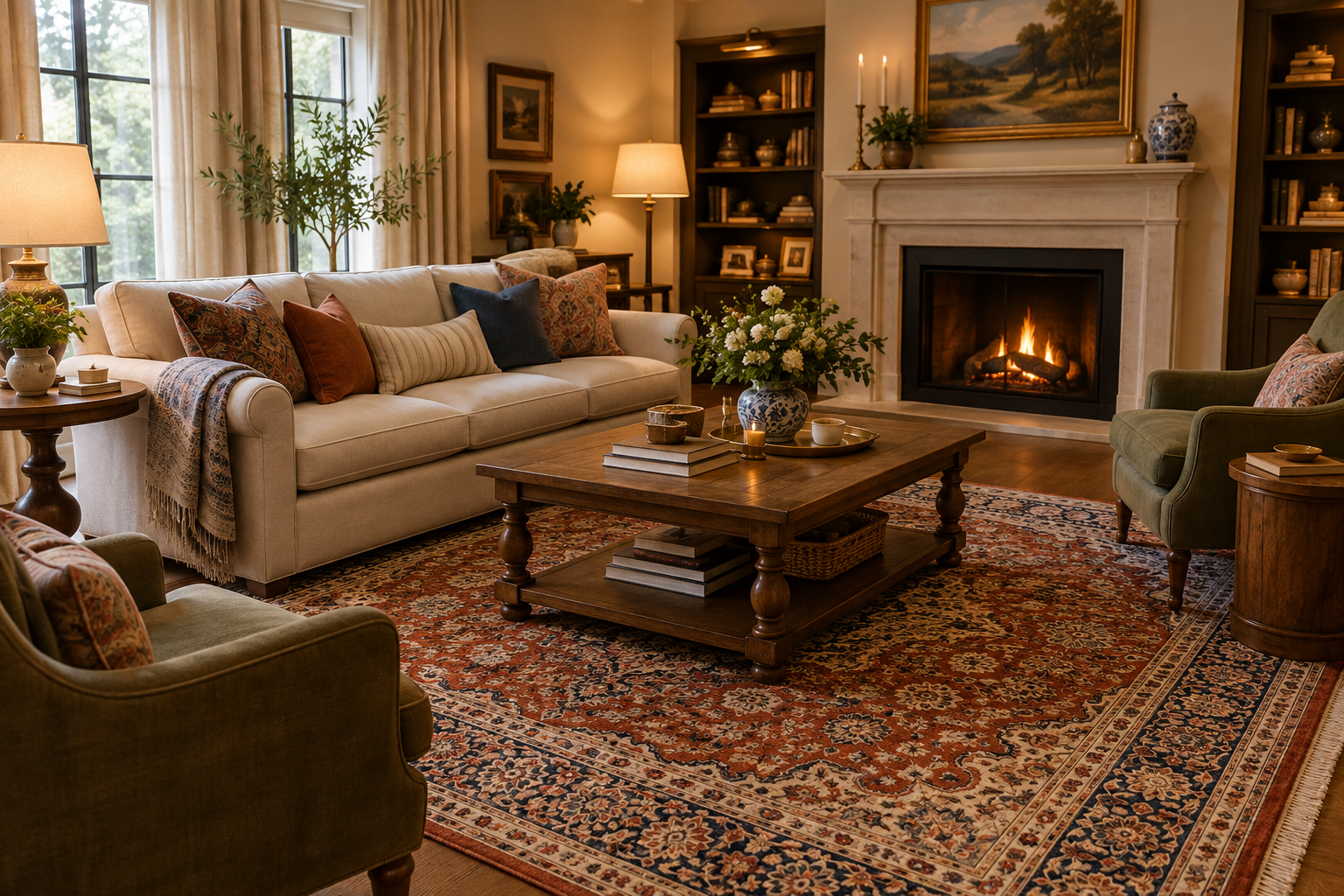
The right rug construction depends heavily on where you plan to use it.
Living Room
Living rooms typically experience moderate to high foot traffic.
Choose a rug with durable construction that can handle regular use.
Wool, well-made flatweaves, and durable handmade constructions can work particularly well depending on the space.
Bedroom
Bedrooms generally have lower traffic.
Comfort and softness may be higher priorities than heavy-duty construction.
A plush wool rug or textured handmade rug can create a warm and comfortable atmosphere.
Dining Room
Dining areas require careful consideration because chairs move across the rug.
A low- or medium-pile rug can make moving chairs easier and can also simplify maintenance.
The rug should have stable construction and be appropriately sized.
Hallway
Hallways often receive concentrated foot traffic.
Durability becomes especially important.
A well-made runner with an appropriate construction and rug pad can be a practical choice.
Entryway
Entryways are exposed to outdoor dirt, moisture, and frequent movement.
Choose a rug that suits the level of traffic and can be cleaned and maintained appropriately.
How to Inspect a Rug's Backing Before Buying
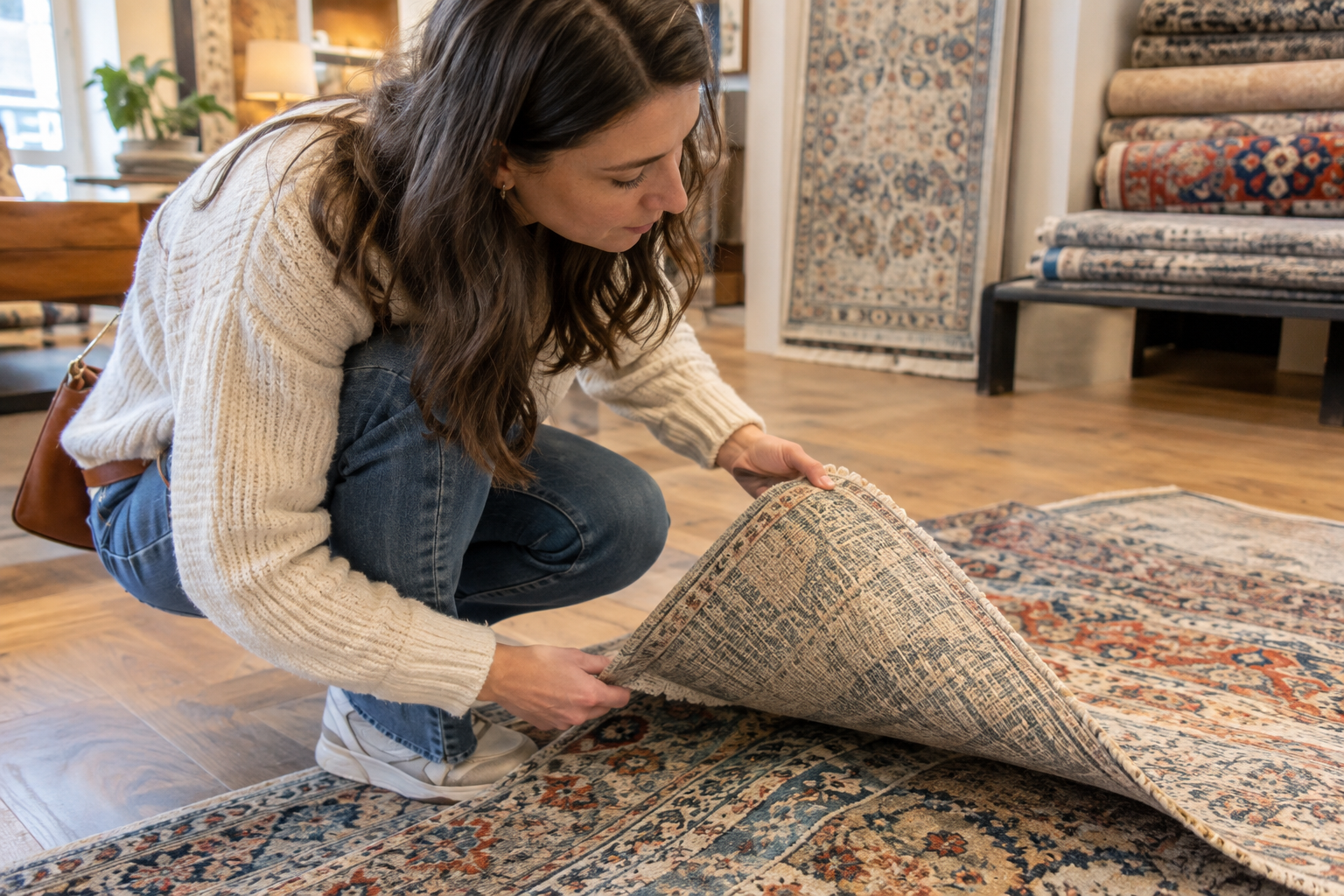
If you are purchasing a rug online, you may not always be able to physically inspect the underside.
Look for product information that explains:
- Rug construction
- Material
- Backing
- Pile height
- Dimensions
- Care instructions
- Recommended placement
- Whether a rug pad is recommended
If buying in person, turn the rug over and examine its underside.
Look for:
Consistent construction
The underside should generally appear consistent with the rug's stated construction.
Secure finishing
Edges and corners should be properly finished.
No obvious separation
If the rug uses multiple backing layers, they should not show obvious signs of separation or damage.
Appropriate materials
Ask what materials have been used in the backing if the information is not provided.
For handmade rugs, some variation is expected and can be part of their character.
Does a Rug Need a Non-Slip Backing?
Not every rug needs an integrated non-slip backing.
In fact, many quality handmade rugs are designed without a rubberized non-slip underside.
Instead, a separate rug pad can be used.
This can offer greater flexibility because you can choose a pad based on your flooring and rug.
For example, a rug in a bedroom may benefit from a different type of pad than a runner placed on a smooth hallway floor.
The important thing is to ensure that the combination of rug, pad, and flooring is compatible.
Rug Backing and Handmade Rugs
One of the most appealing things about handmade rugs is that their construction can often be part of their story.
When you look at the underside of a hand-knotted or handwoven rug, you may see evidence of the process used to create it.
Small differences in knots, weave, texture, or finishing can occur naturally.
These variations should not automatically be interpreted as flaws.
In fact, they can be part of what makes handmade rugs feel unique.
Unlike mass-produced products designed to look identical, handcrafted rugs may retain subtle signs of the human process behind them.
For a brand like Nostalgic Rugs, this connection between craftsmanship and character is particularly meaningful.
A rug is not simply a decorative layer placed on a floor. It can also represent material, technique, time, and human craftsmanship.
How to Care for a Rug and Its Backing
Proper care can help extend the life of the entire rug.
Vacuum regularly
Regular vacuuming helps remove dirt and grit that can work their way into the fibers.
Use a suitable vacuum setting for the rug's construction.
Avoid excessive moisture
Moisture can be particularly problematic for certain rug constructions and backing materials.
Follow the manufacturer's cleaning instructions.
Rotate the rug
Rotating a rug periodically can help distribute foot traffic and sunlight exposure more evenly.
Use suitable furniture protection
Heavy furniture can place concentrated pressure on a rug.
Furniture coasters or appropriate protective solutions may help reduce excessive pressure.
Use a suitable rug pad
A good rug pad can reduce movement and provide an additional layer of protection.
Address spills promptly
Blot spills rather than aggressively rubbing them into the fibers.
For valuable or delicate handmade rugs, professional cleaning may be preferable.
Common Mistakes to Avoid
Understanding rug backing also means knowing what not to do.
Mistake 1: Choosing a Rug Based Only on Appearance
A beautiful rug still needs to suit your lifestyle.
Consider construction, material, traffic, and maintenance requirements.
Mistake 2: Assuming Thick Means Better
A thicker rug is not automatically a higher-quality rug.
Quality depends on materials and construction, not thickness alone.
Mistake 3: Ignoring the Flooring
The same rug may behave differently on hardwood, tile, concrete, or carpet.
Consider the interaction between the rug, backing, pad, and floor.
Mistake 4: Skipping the Rug Pad
Even when a rug has a stable construction, a suitable rug pad can improve comfort and reduce movement.
Mistake 5: Using the Wrong Cleaning Method
Some backing materials and handmade constructions can be sensitive to excessive water or harsh chemicals.
Always follow the care instructions.
Final Thoughts: Look Beyond the Surface
When shopping for a rug, it is easy to fall in love with the pattern first.
But a rug is more than its visible surface.
Its fibers, weave, knots, density, finishing, and backing all contribute to how it performs in your home.
Rug backing can help support the construction, influence stability, and contribute to durability. However, it should always be considered as part of the larger picture rather than as a standalone measure of quality.
For handmade rugs especially, the underside can tell you something about how the piece was created.
The next time you shop for a rug, take a moment to look beyond the pattern and texture. Ask what the rug is made from, how it was constructed, what kind of backing or underside it has, and how it should be cared for.
Choosing a rug with the right construction for your lifestyle can help you enjoy its beauty and comfort for years to come.
At Nostalgic Rugs, we believe that the beauty of a rug comes from more than what you see on the surface. Thoughtful materials, skilled craftsmanship, distinctive textures, and timeless designs come together to create pieces made to become part of your home and its story.
Frequently Asked Questions
1. What is rug backing?
Rug backing is the underside or supporting structure of a rug. Depending on the construction, it may be woven, fabric-based, adhesive-backed, or formed naturally through the rug's weaving or knotting process.
2. Why is rug backing important?
Rug backing can contribute to the structural integrity, stability, and durability of a rug. Its importance depends on the rug's construction and intended use.
3. Is a rug pad the same as rug backing?
No. Rug backing is part of the rug itself, while a rug pad is a separate layer placed underneath the rug to provide grip, cushioning, and additional floor protection.
4. Do handmade rugs have backing?
Some handmade rugs have a separate backing layer, while handwoven and hand-knotted rugs may have an underside that is essentially part of their natural construction.
5. Does backing make a rug more durable?
Backing can contribute to the overall construction, but durability also depends on fiber quality, weave, knotting, density, craftsmanship, and how the rug is used and maintained.
6. Is latex backing good for rugs?
Latex-based backing is used in certain rug constructions and can help secure fibers or provide structure. Whether it is appropriate depends on the specific rug and flooring.
7. Do I need a rug pad if my rug already has backing?
Often, yes. A rug pad can provide additional grip, cushioning, and protection even when a rug already has its own backing.
8. Can rug backing damage hardwood floors?
Certain backing materials may not be compatible with particular flooring finishes. Always check the manufacturer's recommendations and consider using a suitable rug pad.
9. Does rug backing prevent a rug from slipping?
Not necessarily. Some backing systems provide more stability than others, but a separate non-slip rug pad may be needed, particularly on smooth flooring.
10. How can I tell if a rug is well made?
Look at its material, construction, density, edges, finishing, backing or underside, and overall craftsmanship. A high-quality rug should be appropriate for its intended use.
11. Does the underside of a handmade rug look different?
Yes. Handmade rugs can have visible variations in knots, weaving, foundation, and finishing. These differences can be natural characteristics of handcrafted construction.
12. How do I care for rug backing?
Follow the manufacturer's care instructions, avoid excessive moisture, vacuum appropriately, address spills promptly, and use a suitable rug pad when recommended.